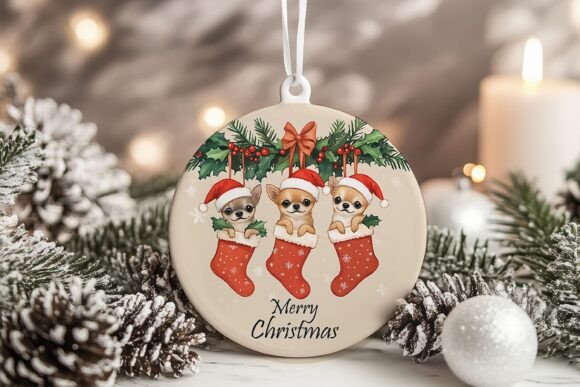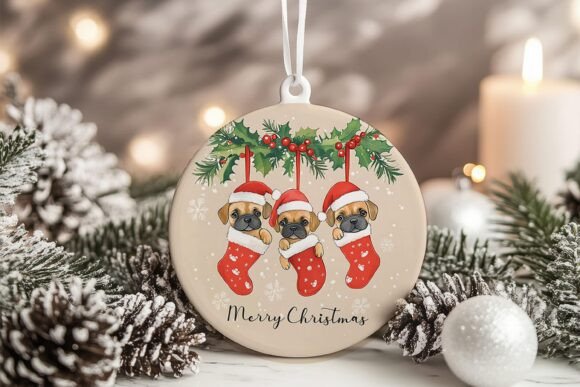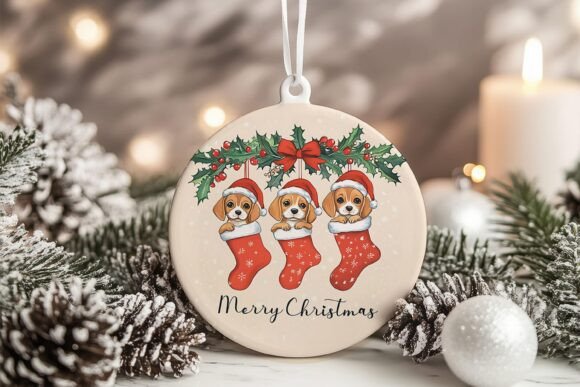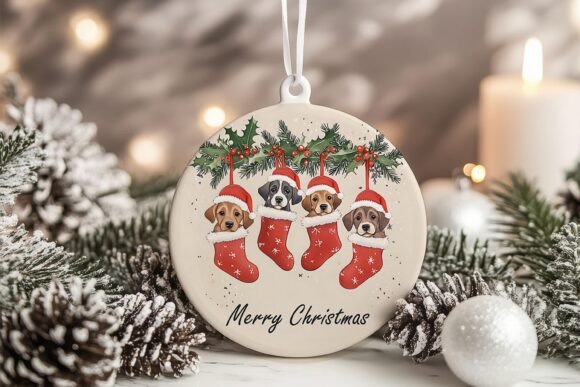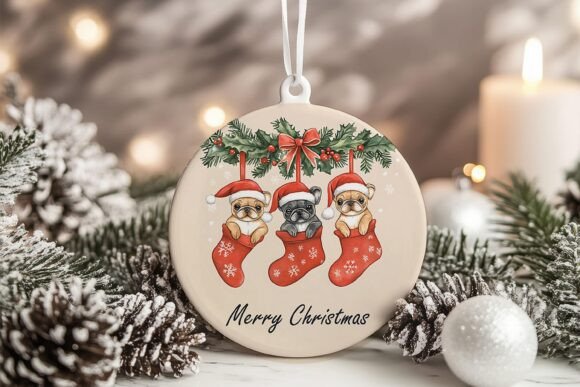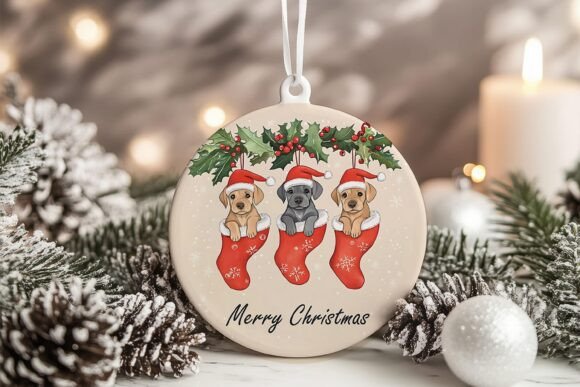
Corgi Puppies in Socks Xmas Ornament
When I first opened the corgi puppies in socks xmas ornament design file, I admit I smiled. There is something immediately disarming about a round ornament frame packed with two corgi pups, each stuffed into tiny Christmas socks, with that classic corgi ear stance and cheerful expression. As someone who has stitched hundreds of holiday designs over the years, I have learned to trust my first reaction. This one felt like it would work well on the right product, but it also raised a few practical questions I want to walk through before any of us commit thread and fabric to it.
The Mood and the Obvious Appeal
This design lands squarely in the sweet spot of cute but not saccharine. The circular ornament format gives it a finished, medallion-like feel that works beautifully as a standalone focal point. The two corgi puppies, tucked into socks, create a natural symmetry that the eye enjoys. There is a playful, cozy energy here that feels right for Christmas without being overly sentimental. If you have customers who are dog lovers, and especially corgi enthusiasts, this design will likely register as a must-have. The round shape also makes it versatile for placement on a variety of items, from the center of a sweatshirt to the front of a tote bag or the middle of a pillow cover.
From a graphics perspective, the file is a PNG on transparent background, which means it is ready for digital mockups and printable uses. But for those of us working in crafts, especially machine embroidery, the PNG is just the starting point. We need to think about how this translates into stitches, what happens when the round shape meets a curved surface, and whether the detail in the puppies' faces survives the digitizing process.
Real Project Scenario: The Custom Tote Bag
Let me paint a real picture. I recently prepared a batch of custom tote bags for a small holiday market. The client wanted a design that felt personal, giftable, and clearly Christmas-themed. I chose the corgi puppies in socks xmas ornament as the centerpiece for a limited run of dog-lover totes. The tote fabric was a medium-weight cotton canvas in natural cream. The round ornament shape sat perfectly about four inches in diameter on the front panel. I ran a test stitch on a scrap piece first, and that is where the real learning happened.
The satin stitch around the ornament border came out clean, but the inner details, especially the puppies' eyes, noses, and the sock stripes, required careful thread color selection. I used a bright red for the socks and a warm white for the fur, with dark brown for the facial features. The contrast was strong enough that the design read well from a few feet away. Customers at the market responded immediately. Several people said, "That is so cute," before even asking about the price. That kind of gut reaction is what sells a handmade product at a craft fair. The design carried the emotional weight, and the tote became the carrier for that feeling.
How the Design Performs in Real Embroidery
I have tested this design on several fabric types, and here is what I have found. On stable fabrics like cotton canvas, denim, and quilted cotton, the stitch-out is reliable. The round shape holds its integrity, and the details inside the ornament stay crisp. On a sweatshirt or fleece, the design still works, but I recommend using a medium-weight cutaway stabilizer and a temporary spray adhesive to keep the fabric from shifting. The circular outline can distort on stretchy knits if the hoop is not tight enough, so take your time with hooping.
For custom apparel like t-shirts or baby onesies, the design is small enough to fit comfortably on a chest or sleeve. The puppy faces are detailed enough to be charming, but not so dense that they cause puckering on lightweight fabric. I ran a test on a fine jersey knit, and the fill stitches in the puppies' bodies did pull the fabric slightly. A layer of water-soluble stabilizer on top helped keep the stitches from sinking into the nap. If you are stitching on dark fabric, be sure to test your thread colors. The red and white pop nicely, but the dark brown facial details might blend into a black or navy background if you are not careful.
On curved surfaces like caps, the round ornament shape can be tricky. The brim and the curve of the cap front mean the design needs to sit lower than you might think to avoid distortion. I would recommend a hoop size that allows the entire design to fit without stretching. If the design is too large for the cap front, the outer edges of the circle may not lay flat. This is not a dealbreaker, but it is something to test before you take a bulk order.
Where to Use This Design Carefully
I have found that the corgi puppies in socks xmas ornament works best on medium to large surfaces where the round shape can breathe. On a pillow cover, it looks like a festive medallion. On a kitchen towel, it sits nicely near the bottom hem. On a baby blanket, it becomes a sweet focal point. But on very small items like a bib or a tiny cap, the detail may crowd the space. The puppies' faces are the heart of the design, and if you shrink them too much, you lose the expression that makes them charming.
For embroidered patches, this design is actually a strong candidate. The circular border gives it a natural patch shape, and the satin stitch edge can serve as a merrowed border if you digitize it carefully. I would test the patch on a scrap fabric first, using a tear-away stabilizer and a hot-cut or laser-cut edge. The round shape makes it easy to sew onto a bag, a jacket, or even a stocking.
On dark fabric, as I mentioned, thread contrast is critical. The PNG file shows the design on a transparent background, which is great for mockups, but it does not tell you how the colors will read on a dark ground. I recommend doing a black-and-white printout of the design to check the value contrast. If the puppies blend into the background, you will lose the visual impact. A white or light underlay can help, but it adds stitch density, so test it first.
Visual Appeal, Product Value, and Customer Trust
When a customer sees a well-stitched corgi puppies in socks xmas ornament on a product, they perceive it as a thoughtful, high-quality item. The holiday theme is clear, the dog motif is specific, and the round ornament shape gives it a polished, finished look. This is not a generic snowflake or a vague Christmas tree. It is a design that says, "I know someone who loves corgis, and I picked this for them." That personal connection is what drives gift sales and repeat business.
For Etsy sellers and small shop owners, this design works well in listings because the round shape photographs nicely. It fills the frame, and the puppies' faces are easy to see in a thumbnail. I would recommend using the PNG file for printable mockups to show the design on a variety of items. A mockup on a tote bag, a sweatshirt, and a pillow cover gives customers a clear idea of how the finished product will look. That transparency builds trust and reduces the likelihood of returns.
From a brand consistency standpoint, this design fits into a playful, pet-friendly, holiday collection. If you already stock dog-themed items, this is a natural addition. If you are just starting a holiday line, this design can anchor a small set of coordinating products. The round shape also makes it easy to pair with text or other small motifs around it, though I would keep the layout simple to let the puppies shine.
Practical Designer Notes Before You Stitch
Here is what I always do before committing to a full production run with any new design, and I recommend the same for the corgi puppies in socks xmas ornament.
- Test on scrap fabric first. Use the same fabric type you plan to use for the final product. Check the stitch-out for any gaps, pulls, or misalignment. Pay special attention to the puppies' eyes and noses, those details make or break the charm.
- Review thread color contrast. The PNG file gives you a visual reference, but real thread colors can look different on fabric. Pull a few thread color cards and compare them against your fabric. I found that a slightly warmer white for the fur and a true red for the socks gave the best result.
- Check stitch density. If the design feels too dense in the fill areas, the fabric may pucker, especially on lightweight materials. If it feels too sparse, the design may look unfinished. Adjust the density in your digitizing software if needed, or choose a stabilizer that compensates for the fabric weight.
- Confirm hoop size. This design is round, so it fits best in a hoop that is slightly larger than the design diameter. Avoid hoops that are too small, as they can distort the circle. If you are using a multi-needle machine, check that the design fits within your standard hoop sizes.
- Test in black and white. Print the design in grayscale to check the value contrast. If the puppies and the background are similar in tone, the design will look flat. Adjust thread colors to create clear separation.
- Compare light and dark fabric backgrounds. The same design can look dramatically different on a white tote versus a navy sweatshirt. Run a test on both if you plan to offer multiple color options.
- Use proper stabilizer. For stable fabrics, a tear-away stabilizer may be enough. For stretchy or textured fabrics, use a cutaway stabilizer and consider a topping layer. The circular outline needs stable support to stay round.
- Check licensing. Since the product description mentions printable and digital files, confirm whether the license allows commercial use of finished products. If you plan to sell items with this design, make sure you have the right to do so. The same applies if you are selling the digital file itself. If the license terms are not clear, contact the seller before you start production.
Final Thoughts on the Design
The corgi puppies in socks xmas ornament is a genuinely charming design that has strong potential for holiday embroidery projects. It appeals to dog lovers, works well on a range of products, and has a clean, round format that is easy to place and photograph. The PNG file format makes it convenient for digital mockups and printable uses, but the real magic happens when you stitch it out on a quality fabric with good thread choices.
As with any design, the success of the final product depends on your preparation. Test your materials, check your thread contrast, and choose your stabilizer wisely. If you do that, this design will earn its place in your holiday lineup. I have used it on tote bags, sweatshirts, and pillow covers, and each time it drew exactly the reaction I wanted. That is the mark of a design that works, not just on screen, but in the hands of your customers.