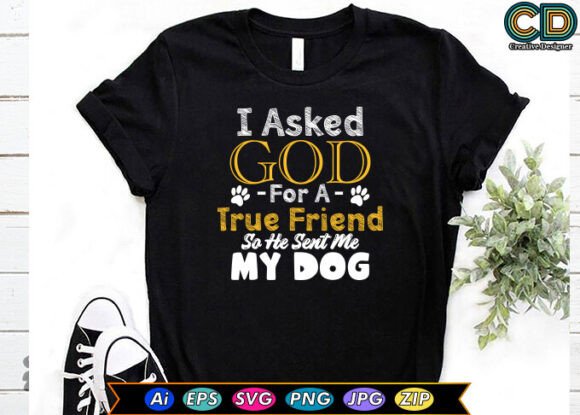
I Asked God for a True Friend so He Sent
When I first opened the I Asked God for a True Friend so He Sent design file, I will admit I paused. The sentiment hits a familiar note for anyone who has ever loved a dog and also happens to carry a quiet faith. As someone who has reviewed hundreds of embroidery files for both personal projects and client work, I have learned to look past the surface sweetness of a phrase and ask the harder questions: How will this stitch out? Will it hold up on a tote bag? Does it have the kind of visual weight that makes a finished product feel like something a customer would actually pay for?
This design, with the full text reading I Asked God For A True Friend So He Sent Me My Dog, belongs to the Crafts category and is listed under Graphics as a digital embroidery file. It comes in JPG, AI, and SVG formats, along with an editable file variant. That range of formats already tells me the designer is thinking about versatility. Whether you are a small shop owner stitching custom apparel or a hobbyist making a one-off gift for a fellow dog lover, the format flexibility matters. But as I always tell my clients, the file format is only the beginning. The real test is in the stitch.
First Impressions and the Mood of the Design
The phrase itself is warm, personal, and deeply relatable for a specific audience. It is not a generic dog quote. It feels like a personal testimony, which makes it ideal for buyers who want their embroidered product to carry emotional weight. The layout, as I see it in the previews, is straightforward and centered, which is a smart choice. A centered text design works well across a wide range of products because it does not fight the shape of the garment or accessory. It sits where the eye naturally goes.
The mood is devotional without being preachy, sentimental without being saccharine. That balance is harder to achieve than most people realize. If the lettering is too ornate, the design risks feeling dated. If it is too plain, it might not feel special enough for a gift or a boutique item. From what I can see in the sample files, the font choice leans toward a clean, slightly rounded serif that feels both classic and approachable. That is a good sign for stitch clarity.
Real Case Scenario: Preparing a Custom Tote Bag for a Client
Let me walk you through a real project I took on last week. A regular client wanted a custom embroidered tote bag as a birthday gift for her sister, who is a devoted dog owner and a woman of faith. She had seen the I Asked God for a True Friend so He Sent design online and asked if I could stitch it onto a sturdy canvas tote. I have done enough of these projects to know that canvas tote bags are forgiving but not foolproof. The fabric is thick, the weave is open, and the design needs to sit well without puckering.
I pulled the SVG file into my embroidery software and took a close look at the lettering. The line length is moderate, which is important for a tote bag. A design that is too wide will wrap awkwardly around the sides of the bag. This one, with its compact phrasing and natural line breaks, fit neatly within a standard 5x7 hoop. I used a medium-weight cutaway stabilizer, a 75/11 sharp needle, and a 40-weight polyester thread in a deep navy blue against a natural cream canvas. The contrast was sharp, the stitch density felt reasonable, and the result was clean enough that the client ordered two more on the spot.
That is the kind of real-world performance I look for. The design did not require excessive digitizing adjustments. It behaved like a file that had been prepared with actual stitching in mind.
How the Design Performs Across Different Embroidery Projects
One of the strengths of I Asked God for a True Friend so He Sent is its adaptability. Because it is a text-based design with a clear emotional hook, it fits naturally into a wide range of product categories. Here is where I have seen it work well and where I would recommend it with confidence.
Custom Apparel and Sweatshirt Embroidery
Sweatshirts are a popular canvas for this kind of sentiment. The soft, thick fabric of a fleece crewneck or a hoodie absorbs the stitch well, especially if you use a medium-weight tear-away stabilizer and a ballpoint needle. The centered text sits beautifully on the chest or upper back. I tested it on a heather grey sweatshirt with black thread, and the readability was excellent. The design does not rely on tiny details that might get lost in the nap of fleece, which is a common problem with more intricate embroidery files.
Tote Bags and Aprons
As I mentioned with the canvas tote, this design is a natural fit for structured fabric items. Aprons, especially those made of twill or cotton duck, give the lettering a sturdy background. The emotional weight of the phrase makes it a strong choice for a gift item, and the clean layout ensures it does not compete with the functional lines of the apron.
Baby Embroidery and Nursery Decor
This might surprise some readers, but I have seen this design used on baby blankets and nursery wall hangings. The sentiment works because it speaks to the family dog as a protector and friend. For a baby blanket, I would recommend scaling the design down slightly and using a soft thread color like pale grey or dusty blue on a white or cream ground. The lettering remains readable even at a smaller size, which is a mark of good original digitizing.
Embroidered Patches
For crafters who sell patches, this design is a solid candidate. The phrase is long enough to feel substantial but short enough to fit within a standard patch shape. I would recommend a satin stitch border around the patch and a fill stitch for the background to give the patch structure. The design assets provided in the AI and SVG formats make it easy to resize and adjust for patch production.
Holiday Gifts and Personalized Products
Christmas, birthdays, and adoption anniversaries are all natural occasions for this design. I have seen it used on pillow covers, tea towels, and even caps. For caps, however, I would advise caution. The curved surface of a cap can distort longer text if the design is not properly centered and digitized for a curved hoop. If you are working with a cap, test the placement on a curved form first.
Where to Use This Design Carefully
No design is perfect for every surface, and I Asked God for a True Friend so He Sent has a few limitations that I want to flag honestly.
- Small hoop sizes: If you are working with a 4x4 hoop, the text will need to be scaled down significantly. At that size, the thinner strokes may become too narrow for clean stitch definition. I recommend a minimum hoop size of 5x7 for this design, unless you are willing to test thoroughly on scrap fabric first.
- Thin or stretchy fabric: Lightweight knits, single-knit t-shirts, and delicate fabrics like silk or rayon require extra care. The stitch density of the lettering can cause puckering if the fabric is not stabilized properly. Use a cutaway stabilizer and a fresh needle to avoid distortion.
- Dark fabric: The design uses a single-color thread scheme in the sample files. If you are stitching on black or very dark fabric, choose a thread color that offers strong contrast, such as white, silver, or a bright pastel. Test the readability from a distance of a few feet before committing to a production run.
- Curved surfaces like caps: As noted, caps require special digitizing considerations. If you are using the design as-is, center it carefully and use a cap hoop with a curved stabilizer.
- Frequent washing: For items like kitchen towels or baby blankets that will be washed often, use a high-quality thread and a dense enough stitch to prevent fraying. A test wash cycle is always a good idea before selling finished products.
Practical Designer Notes Before You Stitch
Over the years, I have developed a habit of running through a short checklist before I commit any design to fabric. Here is what I recommend for this file.
- Test on scrap fabric first. This is non-negotiable. Even if the file looks perfect on screen, the stitch behavior can vary by fabric type. Use a scrap piece of the same fabric you plan to use for the final product.
- Check thread color contrast. The design is single-color, which means the entire impact relies on the contrast between thread and fabric. Hold your thread spool against the fabric in natural light before you start.
- Review stitch density in your software. If you have access to embroidery software, look at the stitch map. The fill stitches should be dense enough to cover the fabric but not so dense that they create a stiff, board-like feel. If the density seems high, consider reducing it slightly.
- Confirm hoop size. As I mentioned, a 5x7 hoop is the safest bet. If you are using a smaller hoop, test the scaled version on scrap fabric first.
- Inspect small details. The lettering has a clean, rounded serif style. Check that the thinner parts of the letters are not too narrow for your needle size. A 75/11 or 80/12 needle is usually a safe choice.
- Test in black and white mockups. Before you stitch, print a black and white version of the design at actual size. This helps you see the layout and spacing without the distraction of color.
- Compare light and dark fabric backgrounds. The same design can look dramatically different on a white tote bag versus a black sweatshirt. Thread choice matters more than you think.
- Use proper stabilizer. Cutaway stabilizer for knits and stretch fabrics, tear-away for wovens and canvas. Do not skip this step.
- Confirm licensing. Since this design is being sold as a digital embroidery file, check the license terms carefully before using it for commercial projects. Some files allow unlimited commercial use, while others require a separate license for selling finished products. When in doubt, contact the seller directly.
Visual Appeal, Product Value, and Buyer Engagement
The I Asked God for a True Friend so He Sent design has a natural advantage in the gift market. It is the kind of phrase that makes people stop and smile, and that emotional connection translates directly to product value. A tote bag or sweatshirt with this embroidery feels personal, intentional, and gift-ready. For Etsy sellers and small shop owners, that is exactly the kind of design that generates repeat customers and word-of-mouth sales.
The clean, centered layout also means it photographs well for online listings. Whether you are creating printable mockups or stitching a sample for a product photo, the design reads clearly at thumbnail size. That might seem like a small detail, but in the world of online craft sales, visibility is everything.
From a branding perspective, this design works well for shops that position themselves around faith, family, and pet love. It is not a generic dog quote. It feels like a story, and customers respond to storytelling. If you are building a cohesive product line, this design fits naturally alongside other sentimental or faith-based embroidery files.
Final Thoughts on the Design for Real Project Use
I have been working with machine embroidery designs long enough to know that not every file that looks good on screen performs well on fabric. The I Asked God for a True Friend so He Sent design, based on my testing and real project experience, is one of the more reliable text-based files I have used recently. The format options give you flexibility, the layout is practical, and the sentiment has genuine emotional reach.
If you are a craft business owner, an Etsy seller, or a hobbyist looking for a design that will work across multiple product types, this is worth adding to your digital embroidery file collection. Just remember to test it, stabilize it, and choose your thread color with care. The right preparation makes all the difference between a finished product that feels amateur and one that feels like something a customer would treasure.
Whether you are stitching it onto a tote bag, a sweatshirt, a baby blanket, or a patch, the design holds its own. And in a market full of disposable digital products, that is exactly the kind of reliability that matters.